Sound of Charlotte Blog
What Christopher Warren-Green Loves About CSO On Demand
November 4, 2020
When Music Director Christopher Warren-Green returned to Charlotte in October, it had been more than 7 months since he stood at the podium. "It's like a great big hole in your life," he said about the lengthy break from performing. "It's forced me to slow down and reevaluate what's important."
One thing that's important to Maestro Warren-Green is getting back to work with the musicians of the CSO. "When you have an Orchestra that's played together for 80 years, it becomes like its own instrument a well-oiled machine with its own developed sound. If they go too long without playing together it can cause problems, not to mention that we'd all have nervous breakdowns! At the end of the day, we all live, eat, and breathe music. You wouldn't do this job if that wasn't true."
While concerts this season -- Warren-Green's eleventh with the CSO -- might be a bit different, the Maestro is looking forward to the opportunities that it will bring. "Because of social distancing, we've had to scale down from our full symphony orchestra. What that does, strangely enough, is give us the opportunity to explore repertoire that we wouldn't normally be able to share with our audience.""We are living in a technological revolution, and maybe something good comes out of this."
CSO on Demand -- the Symphony's virtual concert series -- includes two concerts conducted by Maestro Warren-Green this fall, including works by Brahms, Dvořák, Grieg, and Tchaikovsky. He's been pleasantly surprised by the success of virtual concerts during the quarantine. "As a musician watching the BBC Proms from my living room this year, it was almost like the concert was happening just for me. And knowing that there were thousands of other people in their houses feeling the same thing; it really got into my heart. I thought, 'Wow! There is something really special going on.' We are living in a technological revolution, and maybe something good comes out of this."
His advice for you? "Get dressed, go into your living room, have a glass of wine, sit down and make sure no one interrupts you. Do that and watch our virtual concerts, and you'll get something extraordinary from it." Read more

100 Years of Voting Rights for Women
August 18, 2020Today marks the centennial of the ratification of the 19th Amendment, which prohibits states and the federal government from denying U.S. citizens the right to vote on the basis of sex. To celebrate this historic achievement, the Charlotte Symphony is using its platform to highlight the many contributions of women in classical music. We asked a few CSO musicians and conductors to share with us a list of women composers who they wish everyone knew more about.
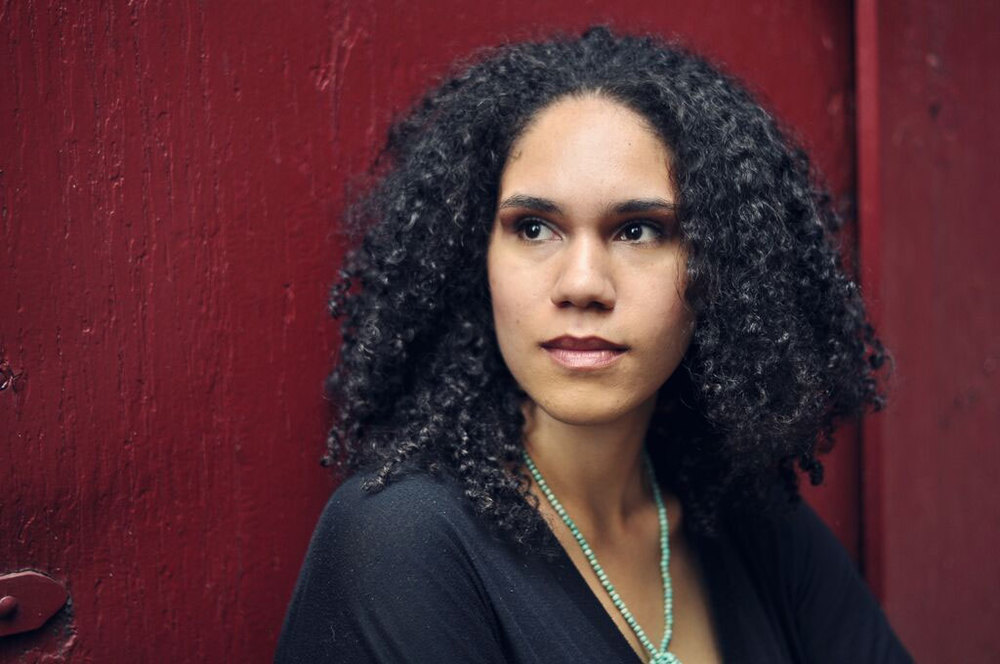
Jessie Montgomery
Jessie Montgomery is an acclaimed composer, violinist, and educator. Her music interweaves classical music with elements of vernacular music, improvisation, language, and social justice, placing her squarely as one of the most relevant interpreters of 21st-century American sound and experience."She's an extremely talented individual, an accomplished violinist and chamber musician in the Catalyst Quartet, and I've been so proud to perform her wonderful music alongside the rest of our canon of timeless art pieces. I hope we will continue to share her beautiful work with our Charlotte community!" - Principal Violist Benjamin Geller
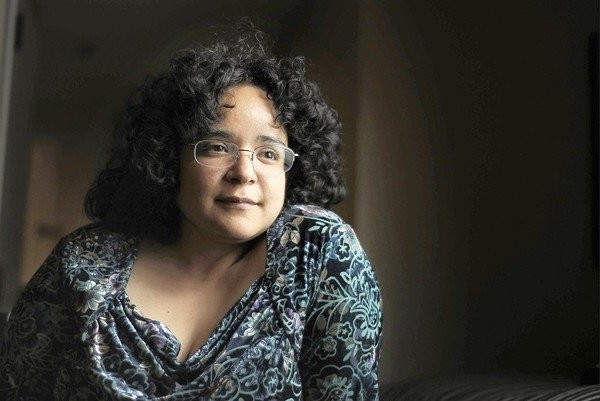
Gabriela Lena Frank
Born in Berkeley, California to a mother of mixed Peruvian/Chinese ancestry and a father of Lithuanian/Jewish descent, Gabriela explores her multicultural heritage through her compositions. Her music often reflects not only her own personal experience as a multi-racial Latina, but also refract her studies of Latin American cultures, incorporating poetry, mythology, and native musical styles into a western classical framework that is uniquely her own."Gabriela Lena Frank is a varied & important fixture in American composition, has numerous awards & Composer in Residence credentials, and has founded a Creative Academy of Music which enables opportunity for dozens of up & coming composers. Her string orchestra piece 'An Andean Walkabout,' written for A Far Cry in Boston, is both visceral in energy & jarring rhythmically. A terrific, monumental piece that I love." - Resident Conductor Christopher James Lees
Barbara York
Barbara York has been working in both Canada and the U.S. for over 40 years as a concert accompanist, choral and theatrical music director and composer. Her score and lyrics for the Canadian musical Colette won a Dora Mavor Moore Award (Canada's version of a Tony) in 1981."I think her music is important to be celebrated because, to be honest, I just really like it. When I have performed some of her solo pieces, they have spoken personally to me, and I found myself lost in tunes that I wish I had written myself." - Trombonist Thomas Burge
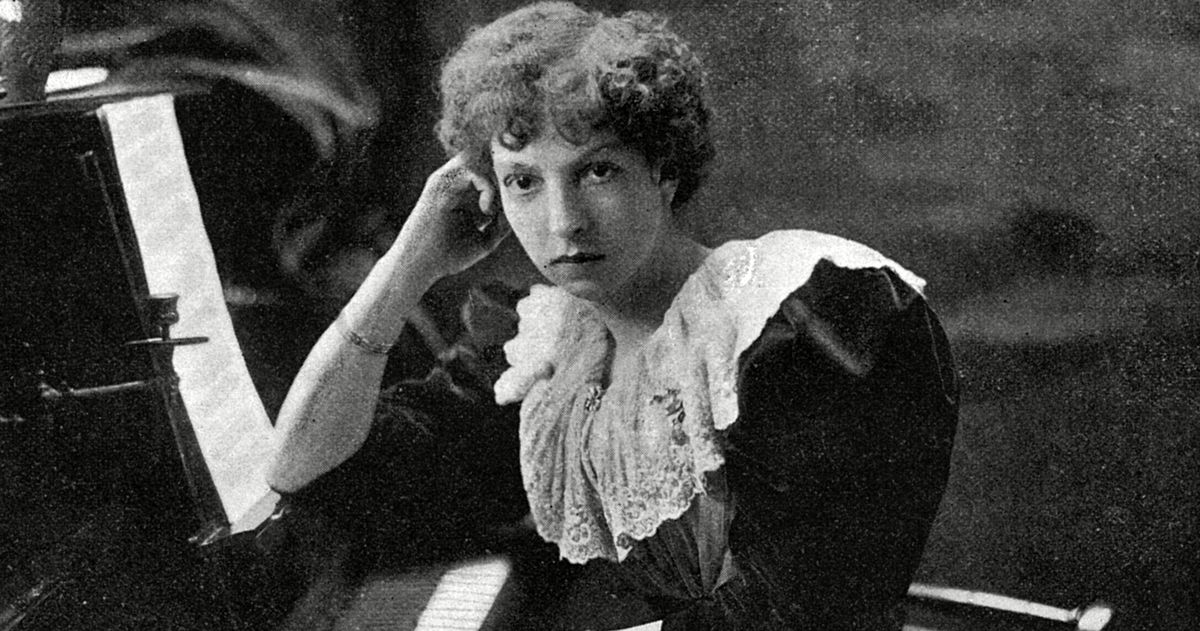
Cécile Chaminade
Cecile Chaminade was a French composer and pianist. In 1913, she was awarded the Legion d'Honneur, a first for a female composer. Chaminade's music has been described as tuneful, highly accessible and mildly chromatic."When I was 13 years old, Chaminade's Concertino for Flute and Orchestra was one of the first big flute solos that I had ever performed. It's a very popular piece for young flutists, and I didn't realize until years after playing it that Chaminade is actually female!" - Youth Philharmonic Conductor Jessica Morel
"Chaminade composed more than 400 pieces, but the Concertino is her most beloved and remains an important piece in the flute repertoire. Though her father did not permit her to attend the Conservatoire de Paris, she was able to study composition privately and eventually gained popularity as a composer and pianist." - Flutist Amy Orsinger Whitehead
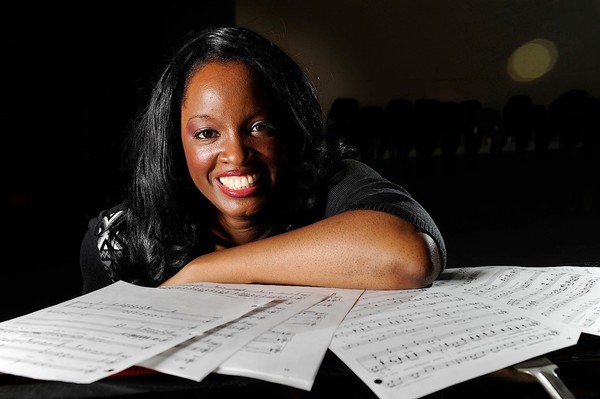
Nkeiru Okoye
Nkeiru Okoye's genre-bending compositions reflect her many influences - Gilbert & Sullivan, the Gershwins Sondheim, Copland, gospel, jazz, and Schoenberg. She specializes in works that celebrate the African American experience. In 2018, the Charlotte Symphony commissioned her to write an orchestral piece in celebration of the city's 250th anniversary."I think Nkeiru Okoye is important because her works incorporate many different sounds and styles from cultural areas that are both part of her own personal journey, and also are part of a larger narrative regarding the history of African American people. Spending her youth divided between living in New York and Nigeria, she offers an important personal perspective through her music that also highlights a broader cultural connection that resonates with many Americans." - Trombonist Thomas Burge
Inspired to learn about more women composers? A great place to start is Music Critic Anne Midgette's list of the top women composers in classical music from The Washington Post. Read more
Trailblazer: Composer Florence B. Price
August 5, 2020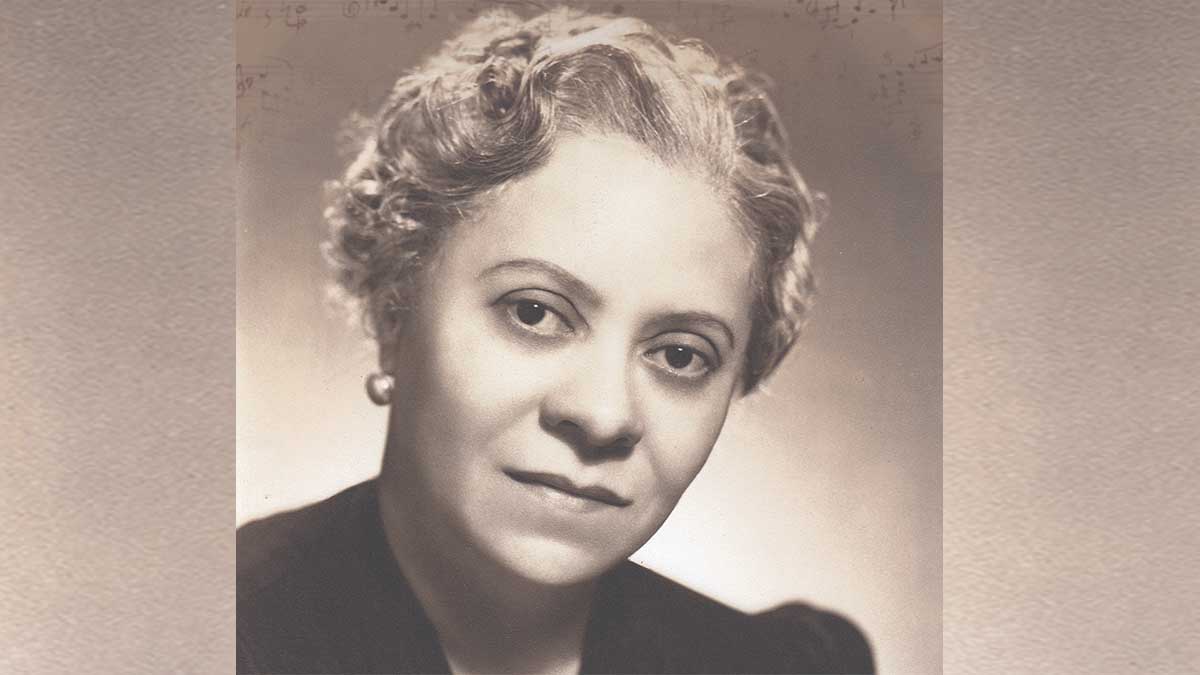
A composer, pianist, organist, and music teacher, Florence Price is recognized as the first African-American woman to have a symphonic work performed by a major national symphony orchestra. Her extraordinary achievements during the racist "Jim Crow" era are a testament to her immense gifts and determination.
Born in Little Rock, AR in 1887, Price grew up in a middle-class household and attended the New England Conservatory, one of the few that admitted African-Americans at the time. Fleeing racial violence in her home state, Price moved with her family to Chicago where her career began to flourish. She won first prize in the Wanamaker Competition with her Symphony in E minor which caught the attention of Chicago Symphony Orchestra Music Director Frederick Stock. The piece was premiered by the Orchestra in 1933 with The Chicago Daily News reporting "It is a faultless work, a work that speaks its own message with restraint and yet with passion ... worthy of a place in the regular symphonic repertory."
Florence Price's musical style was influenced by composers such as Dvořák and Coleridge-Taylor. It is infused with European and African-American musical and cultural elements, including spiritual melodies, gospel church music, and African instruments such as the marimba.
Her piece Adoration, arranged for Brass Quintet, was performed by members of the CSO's brass section on our latest al Fresco concert.
Though recognized in her day, Florence Price's memory and music faded into history - perhaps due in part to the relatively small number of surviving compositions. However, in 2009, nearly 200 of Price's manuscripts were discovered, tucked neatly away in boxes in an old fixer-upper in a suburb of Chicago. The discovery has prompted a happy resurgence in the popularity of her works. We can all hope that this re-examination of her talent and musicality will allow Florence Price to take her rightful place among the great American composers. Read more
A powerful message from Cherokee Nation youth: Si Otsedoha (We're Still Here)
January 29, 2020The Cherokee Chamber Singers have a powerful message to share: Si Otsedoha (We're Still Here). Nestled in an all-American Classical Series concert on Jan. 31 and Feb. 1, 2020, below is everything that you need to know about this powerful work and our collaboration.
Si Otsedoha (We're Still Here) sprang from the minds and hearts of students of Cherokee Middle and High Schools under the guidance of the Cherokee Chamber Singers. Composed in 2018 by contemporary American composer (and NC native) William Brittelle, Si Otsedoha (We're Still Here) is sung in the Cherokee language and musically documents the past, present, and future of the Cherokee people who have lived in the mountains of Western North Carolina for several thousand years.

The Cherokee Chamber Singers vocal group was formed in 2016 as the advanced vocal group from the Performing Arts Department at Cherokee High School, the Native American high school in the Qualla Boundary in Cherokee, NC (also known as the Cherokee Indian Reservation). Under the direction of Michael Yannette, the singers' unique and varied repertoire offers audiences both traditional and modern Native American music, as well as choral, classical, musical theater, and pop/rock genres.
"I have been a teacher for 33 years and have never been part of something with the impact of this work," Yannette said. "The audience reaction has been overwhelmingly positive; I thought people might be disturbed by it in Raleigh, but it had universal acceptance. They were open to what these kids had to say: 'We're still here, and we're always going to be.'"
This concert serves as a continuation of the Symphony's commitment to use music to both explore issues of systematic injustice, and to look to a more equitable future for all people. Under the baton of Music Director Christopher Warren-Green, the orchestra will perform this powerful work that celebrates the creativity and cultural heritage of the original citizens of North Carolina, but also amplifies their voices.
"Si Otsedoha (We're Still Here) is not only an artistically excellent work that shines a light on North Carolina music and composers, but it also gives voice to a group of people in our home state who feel forgotten," Michelle Hamilton, Charlotte Symphony Interim President and CEO, said. "The Charlotte Symphony is proud to share the stage with these young singers and provide a platform for their voices."
Hear their message: Join us on Jan. 31 and Feb. 1 at Belk Theater. Also on the program: Copland's Appalachian Spring and Barber's Adagio for Strings.
Read more
CSO concerts return to WDAV Classical 89.9
August 21, 2019
We're thrilled to announce the return of "Charlotte Symphony in Performance" on WDAV Classical 89.9!
Tune in from 3-5 p.m. on Saturdays, August 24 through October 12, to enjoy (or relive!) four popular concerts from 2017 and 2018 in their entirety. View the schedule below to plan out an afternoon with your Charlotte Symphony playing Gershwin, Bernstein, Mozart, and Mahler.
Americana
Air dates: Saturday, August 24, 3 p.m.
Saturday, September 21, 3 p.m.
Christopher Warren-Green, conductor
Charlotte Symphony Chorus
GERSHWIN An American in Paris
COPLAND Old American Songs
MARK O'CONNOR Americana Symphony
Bernstein Centennial
Air dates: Saturday, August 31, 3 p.m.
Saturday, September 28, 3 p.m.
Christopher Warren-Green, conductor
Jennifer Johnson Cano, mezzo-soprano
BERNSTEIN Symphony No. 1, "Jeremiah"
BERNSTEIN Symphonic Suite from On the Waterfront
BERNSTEIN Symphonic Dances from West Side Story
Mozart Exsultate Jubilate
Air dates: Saturday, September 7, 3 p.m.
Saturday, October 5, 3 p.m.
Christopher Warren-Green, conductor
Amanda Forsythe, soprano
MOZART Overture to The Magic Flute
HAYDN Symphony No. 65
MOZART Exsultate, jubilate
HAYDN Symphony No. 45
Mahler Symphony No. 2
Air dates: Saturday, September 14, 3 p.m.
Saturday, Saturday, October 12, 3 p.m.
The 2016-17 Classical series finale featured just one work; and it was big. More than 250 musicians joined forces to perform Mahler's Second Symphony. A magnificent work that explores the full range of human emotion and our shared quest for understanding. Experience wonder, doubt, triumph and faith in this epic, life-affirming journey
MAHLER Symphony No. 2 (in C Minor), "Resurrection"
Christopher Warren-Green, conductor
Charlotte Symphony Chorus
Kathleen Kim, soprano
Maya Lahyani, mezzo-soprano
This concert titled "Mahler Symphony No. 2" was performed at Belk Theater, May 12-13, 2017.
Read moreMeet the women taking the classical world (and your CSO) by storm
July 22, 2019This season, we're thrilled to have two outstanding women conductors lead the orchestra in concerts featuring masterworks by Beethoven and Bach. Find out how these women broke the "Glass Podium" and became trailblazers in the industry.

JoAnn Falletta: Classical Woman of the Year
JoAnn Falletta is the Music Director of the Buffalo Philharmonic Orchestra and the Virginia Symphony Orchestra, Principal Guest Conductor of the Brevard Music Center and Music Advisor to the Hawaii Symphony. This year, she was named by Performance Today Classical Women of the Year. Falletta joins us April 3-5, 2020 to guest conduct Beethoven's Pastoral at Knight Theater.
Here's how Falletta is making waves in the industry:
- Upon her appointment as Music Director of the Buffalo Philharmonic, she became the first woman to lead a major American ensemble. She has since been credited with bringing the Philharmonic to a new level of national and international prominence.
- In 2018, she made history as the first American woman conductor to lead an orchestra at the prestigious Beethoven Easter Festival.
- She has a discography of 115 titles, 2 of which won GRAMMY® Awards and 10 received nominations.
- She is acclaimed by The Washington Post as having "Toscanini's tight control over ensemble, Walter's affectionate balancing of inner voices, Stokowski's gutsy showmanship, and a controlled frenzy worthy of Bernstein."
- She has guest conducted over a 100 orchestras in North America, and many of the most prominent orchestras in Europe, Asia, South America and Africa.
- She has introduced over 500 works by American composers, including well over 100 world premieres.

Jeannette Sorrell brings fire to Baroque
GRAMMY®-winning conductor and harpsichordist Jeannette Sorrell is recognized internationally as one of today's most compelling interpreters of Baroque and Classical repertoire. She joins us April 17-18, 2020 to guest conduct Bach Brandenburg Concertos at Knight Theater.
What makes Sorrell extraordinary?
- She is the founder and artistic director of the renowned period ensemble APOLLO'S FIRE, with which has one of the largest audiences of any baroque orchestra in North America and sold-out concerts at Carnegie Hall, London's BBC Proms, Madrid's Royal Theatre, the Library of Congress, the Metropolitan Museum of Art (New York), and more.
- She, with APOLLO'S FIRE, has achieved 8 bestsellers on the Billboard classical chart and a 2019 GRAMMY®-winner.
- She studied conducting under Leonard Bernstein and Roger Norrington; and studied harpsichord with pioneer and pillar of the early music movement Gustav Leonhardt.
- She won both First Prize and the Audience Choice Award in the Spivey International Harpsichord Competition, competing against over 70 harpsichordists from Europe, Israel, the U.S., and the Soviet Union.
- She has attracted national attention and awards for her creative programming, which has brought many new listeners to early music.
- In demand with topnotch symphony orchestras and period groups alike, Sorrell has led the National Symphony at the Kennedy Center, the Los Angeles Chamber Orchestra, Seattle Symphony, Handel & Haydn Society, and more.
See these women in action at Knight Theater on April 3-5, 2020 for Beethoven's Pastoral and April 17-18, 2020 for Bach Brandenburg Concertos. Read more
Ravel's Boléro in popular culture
April 30, 2019From Bugs Bunny to How I Met Your Mother, two works on the program for Ravel Boléro have appeared throughout pop culture for nearly a century. Find out where you've heard some of these works before.
Peer Gynt Suite No. 1
Written for Henrik Ibsen's play of the same name, Edvard Grieg's Peer Gynt Suite No. 1 includes four works from the play, two of which have been heavily recycled throughout popular culture: "Morning Mood" and "In the Hall of the Mountain King.""Morning Mood" may sound familiar because it's famous for accompanying images of a picturesque sunrise in movies and television.
You might recall hearing this famous melody in many films, such as Soylent Green (1973) and the Looney Toons' television special Bugs Bunny's Bustin' Out All Over (1980), as well as television shows, like Tiny Toon Adventures, Animaniacs, The Simpsons (Season 9/ Ep. 12 "Bart Carny"), The Big Bang Theory (Season 3/ Ep. 15 "The Large Hadron Collision"), and How I Met Your Mother (Season 5/ Ep. 11 "Last Cigarette Ever").
More fun uses of "Morning Mood" have been in commercials, such as the Doritos Super Bowl XLIX commercials, and as the opening theme music for the popular video game by PopCap Games, Peggle.
"In the Hall of the Mountain King" is another pop culture favorite that often accompanies a stealthy or mischievous scene.
You may recall hearing its theme in the film The Social Network (2011) and popular television shows such as Orange is the New Black (Season 1/ Ep. 4 "Imaginary Enemies" & Season 3/ Ep. 13 "Trust No B****"), How I Met Your Mother (Season 3/ Ep. 4 "Little Boys"), The Simpsons (Season 16/ Ep. 11 "On a Clear Day I Can't See My Sister"), and Mad Men (Season 2/ Ep. 12 "The Mountain King").
Another fun use of "In the Hall of the Mountain King" is as the theme song for the animated television series Inspector Gadget.
Many musicians have also found inspiration with this work over the years. Jazz musician Alvino Rey created his own rendition of the work in 1941, Electric Light Orchestra recorded a version that begins with the "Morning Mood" theme in 1973, and in 1967, British rock band The Who recorded a version which went unreleased until 1995, when it appeared as a bonus track on a CD reissue of The Who Sell Out. Most recently, Gwen Stefani and Justin Timberlake recorded a trap version of the theme, "Hair Up," which was released on the soundtrack to the film Trolls (2016).
Boléro
Originally composed as a ballet for Russian actress and dancer Ida Rubinstein, Boléro premiered in November 1928 at the Paris Opera. This sultry work is Ravel's most famous work and has continued to thrive in popularity throughout pop culture.Boléro appears in a number of films, such as The Three Stooges film Soup to Nuts (1930), 10 (1979), Bolero (1984), Paradise Road (1997), and Basic (2003), as well as television series like Doctor Who (Series 2/ Ep. 8 "The Impossible Planet") and Futurama (Season 5/ Ep. 16 "The Devil's Hands Are Idle Playthings").
Additionally, Frank Zappa performed a reggae version of Boléro during his 1988 world tour, saying it was "one of the best melodies ever written," and Rufus Wainwright heavily integrated the it into his song "Oh, What a World."
However, probably one of the most famous uses was by Olympic Ice Skaters Torvill and Dean, who used a version as accompanying music for their record-scoring and winning performance at the 1984 Winter Olympics. Read more
Meet the Mozart Requiem Soloists
April 8, 2019This weekend, April 12-14, we're performing Mozart's Requiem, a powerful and breathtaking work featuring the Charlotte Symphony Chorus and four soloists. Meet the impressive soloists taking the Belk Theater stage with us:

Soprano Margot Rood is praised by The Washington Post for her "colorful and vital" singing. She made her solo debut at Boston's Symphony Hall in 2011, and since then has been a frequent soloist with the Handel and Haydn Society.
Margot's recent and upcoming stage appearances include La Renommée in Lalande's Les Fontaines de Versailles and Francesca Caccini's Alcina with Boston Early Music Festival; Galatea in Acis & Galatea and First Witch in Dido & Aeneas with Handel and Haydn Society; Hyacinthus in Mozart's Apollo et Hyacinthus with Emmanuel Music, among others.
In addition to opera and oratorio, Margot was a 2015 recipient of the St. Botolph Club Foundation's Emerging Artist Award for her work in new music. She has recorded numerous world premieres and 21st century works. Her solo recording with composer Heather Gilligan, Living in Light, is now available from Albany Records. Margot holds degrees from the University of Michigan and McGill University.

Simon Pauly photography
Ms. Selowsky was a 2016 grant recipient from the Gerda Lissner Foundation and a 2015 recipient of a Richard F. Gold Career Grant from the Shoshanna Foundation. In 2014, she was a National Semifinalist in Metropolitan Opera National Council Auditions and won Third Place in the Houston Grand Opera's prestigious Eleanor McCollum Competition.

This season Isaiah makes solo debuts at Carnegie Hall, the Caramoor Festival, the Innsbruck Festival of Early Music, among others. Other recent engagements include George Benjamin's Written on Skin with the Toronto Symphony; Messiah with the St Paul Chamber Orchestra, the National Arts Centre Orchestra, and the Toronto Symphony, among many others.
As a composer, Isaiah has written four operas including the music and libretti for two operas for young audiences commissioned and widely toured by Opera NUOVA and a number of song cycles and arrangements.

Most recently, Adam sang in Verdi's Requiem with Guelph Symphony Orchestra, returned to Seattle Opera as The Speaker in The Magic Flute, and performed in the Mahler 8th Symphony with Maestro Kent Tritle at the Berkshire Music Festival.
Adam won First Prize in the 2016 Jensen Vocal Competition, and Top Prize in the 2015 George London Foundation competition. He was also a finalist in the 2016 Dallas Opera Competition. He has appeared with some of the nation's leading summer festivals including Merola Opera Center, Aspen Opera Theater Center, and Santa Fe Opera.
A message from the Maestro
March 11, 2019This weekend, we present Mahler's First Symphony on Friday and Saturday evening at Belk Theater. Read this letter from the Maestro below to learn why he thinks this concert is a must-see.
 By now you know that Gustav Mahler is one of my absolute favorite composers. Not only because of the pure grandeur and genius of his writing, but also because of its complexities.
In 2012, I conducted Mahler's Fourth Symphony - my first step in this Mahler journey with your Charlotte Symphony - then Mahler's Fifth Symphony came next in 2015. In 2017, we experienced Mahler's Resurrection Symphony together a program that was met with a rousing standing ovation.
Now you have the chance to hear how it all began to hear how one of the greatest orchestral composers of the 20th century started carving out his symphonic path. Through his imaginative use of symphonic poetry, Mahler's First Symphony the "Titan" changed the genre forever.
Journey with me next as we experience the full range of human emotion out of the inferno and into paradise with your Charlotte Symphony. I've also programmed on the evening Mahler's Blumine, one of the original movements of Mahler's First Symphony, which the composer later removed from the piece.
You've trusted me along this Mahler journey thus far, and I truly do hope you'll join us this weekend at Belk Theater. You'll be in for a real treat.
See you at the Symphony!

Christopher Warren-Green
Music Director Read more
Meet Guest Conductor Gemma New
February 28, 2019
We caught up with upcoming guest conductor Gemma New on what it's like to be considered a "rising star," what inspires her, and what she's most looking forward to about our upcoming program featuring Paul Huang on the Dvořák Violin Concerto, March 29 & 30.
How do you build trust and rapport quickly with each orchestra you lead?
I try to listen carefully and sense the strengths and dynamics within the orchestra. The more I learn about the orchestra as we play together in these first rehearsals, the more I can communicate effectively. Perhaps the most important thing is that I arrive well prepared and with an open mind, and that I encourage a rehearsal environment that is supportive and based on mutual respect.
You have been called a "rising star" in the industry. As a comparatively younger conductor, do you think there is truth to assumptions that some works are interpreted best by more "mature" conductors?
When I first arrived in the US in 2009 to study a Masters in Conducting with Gustav Meier, I was quite scared of Brahms symphonies. How could I possibly understand them as a young person? Fortunately, Mr. Meier tackled those fears head-on, and he had us studying and conducting all of these symphonies, thoroughly and often, throughout the two years I was there. It's also been really helpful being a cover conductor for many excellent conductors and orchestras over the last decade. I do a lot of note-taking, and I will keep these previous experiences in mind when we come to forming interpretive choices in the rehearsal period.
For audiences who may never have heard Brahms Symphony No. 3, what would entice them to attend?
When Gustav Meier shared his love of Brahms with all of us young students he said, sure Brahms's symphonies are mature, but you have to start somewhere! And what I learned over time is that Brahms's music is not unreachable. It is some of the most humanly relatable music: intimate and loving, passionate and awe-inspiring, naturally flowing and inspiringly orchestrated. It touches and moves all of us.
Have you worked with Paul Huang before? What excites you about this upcoming collaboration?
Yes, Paul and I performed Barber's Violin Concerto with the North Carolina Symphony almost 2 years ago, it was fantastic to work with him! I'm excited to hear his rich sound in this Dvorak Violin Concerto.
Any poignant personal stories that connect you with these pieces?
I suggested Mendelssohn's Hebrides, as I thought it would complement the other pieces on the program well. I spent quite a bit of time on a Mendelssohn scholarship in Germany, studying Mendelssohn's music and learning about his incredible life with Mo. Kurt Masur and the staff of the Mendelssohn House in Leipzig. This overture evokes the magnificence of this wild cave, and the swirling power of the ocean and it is a piece that I really love.
What most inspires you?
I think that when we come together and create a beautiful and enriching performance, that is really inspiring to me, and it is a memory that I cherish for a long time.
What do you think about to "center" before a performance like this?
I don't have any rituals, I just try to keep calm, have a concept of the sound and character I'm about to be a part of, and be aware of my breathing before a performance.
Have you ever been to Charlotte?
Yes, I spent a week in Charlotte 8 years ago, serving as cover conductor for Mo. Christopher Warren Green. I'm looking forward to returning to the orchestra, and working on this beautiful program with them!
Gemma New is currently Music Director of the Hamilton Philharmonic Orchestra, Resident Conductor of the St. Louis Symphony Orchestra and Music Director of the St. Louis Symphony Youth Orchestra. See her conduct Dvořák Violin Concerto on March 29 & 30 with violinist Paul Huang. Read more
| « Newer Posts | Older Posts » |
Latest Posts
- MERGE: Symphonic x Electronic
- Heart of the Home Tour Returns
- Composer Spotlight: Nia Imani Franklin
- More Famous Than Mozart: Joseph Bologne, Chevalier de Saint-Georges
- Art in Motion: Rosalia Torres-Weiner Chosen to Design CSO Roadshow
- Announcing Kwamé Ryan as the Charlotte Symphony’s Next Music Director
- Photos: Charlotte Symphony Annual Gala and Concert
- Five Must-See Concerts of the 2023-24 Season
- 5 Pro Tips for the Best Summer Pops Experience
- A Preschool Performance Three Years in the Making
 SHOP
SHOP