




 Program Notes
Ein Heldenleben
(A Hero's Life)
Richard Strauss (1864–1949)
Premiere: March 3, 1899, at the Museumsgesellschaft of Frankfurt am Main, Germany
Approximate performance time is 40 minutes
Behind the music
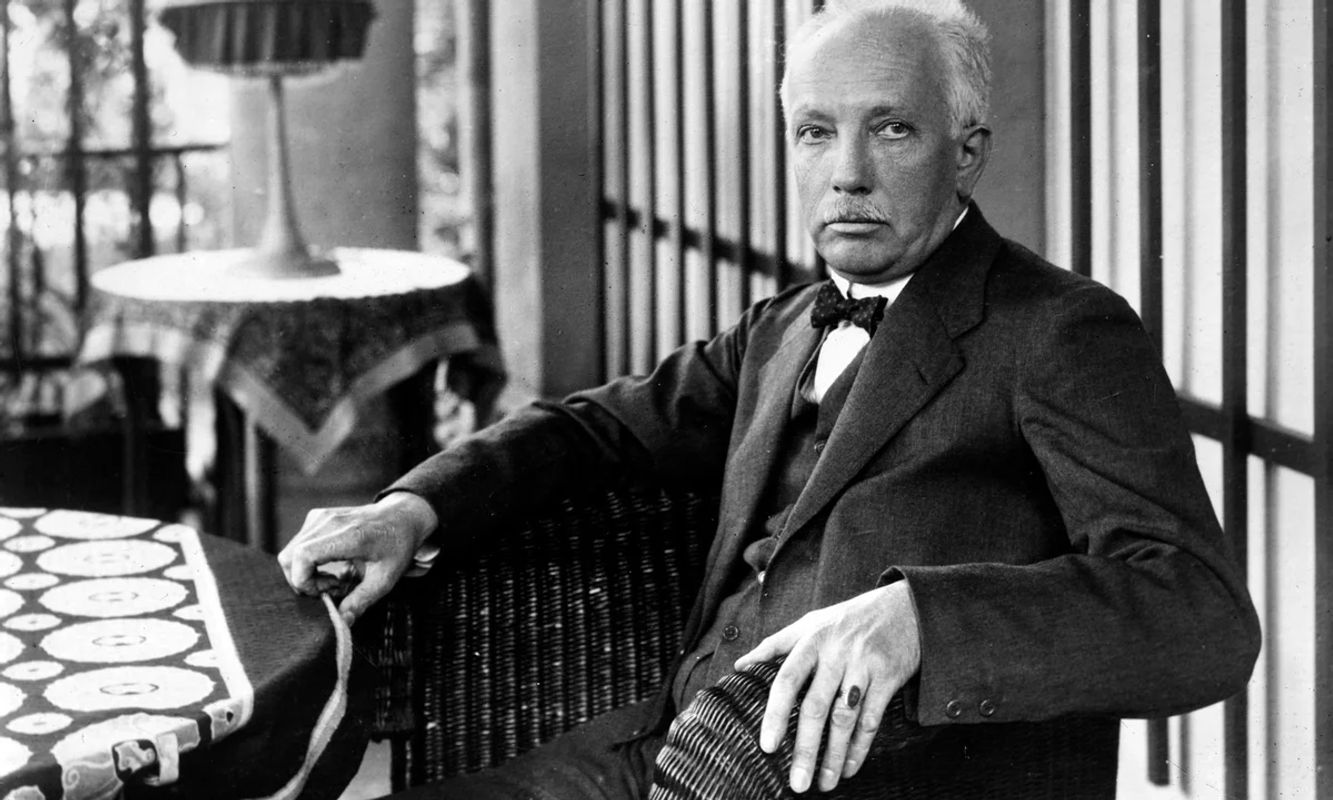
Strauss’s chosen protagonist for his orchestral tone poem Ein Heldenleben (A Hero’s Life) raised a few eyebrows. “I do not see why I should not compose a symphony about myself; I find myself quite as interesting as Napoleon or Alexander,” Strauss confided to his friend and admirer, Romain Rolland. Such a generous self-assessment — both in Strauss’s comments to Rolland, and in the grand, epic music of Ein Heldenleben — seems highly at odds with a life that was remarkable for its lack of adventure and heroism.
It is perhaps important to keep in mind that Strauss was a man with a keen sense of humor and the capacity to laugh at himself. A comment by Strauss comparing Ein Heldenleben to another of his tone poems places it in further context: “I think so strongly of Don Quixote and Ein Heldenleben as being directly linked together that, in particular, Don Quixote is only fully and completely comprehensible when put side by side with Heldenleben.”
It is clear that the perceptions of a man who mistakes windmills for giants, and sheep and goats for enemy soldiers, do not comport with objective reality. But it is precisely the heroic striving against all odds that makes Cervantes’s Don Quixote such an endearing character. And it is perhaps the aspiration in all of us to the heroic that inspires the listener to embrace the saga depicted so masterfully in Strauss’s Ein Heldenleben, despite its lack of confluence with the composer’s actual life.
Richard Strauss completed the full score of Ein Heldenleben on December 27, 1898. He dedicated the work to conductor Willem Mengelberg and the Concertgebouw Orchestra of Amsterdam. But it was Strauss who conducted the Museumsgesellschaft of Frankfurt am Main in the work’s March 3, 1899 premiere.
While You Listen
Ein Heldenleben comprises six episodes, performed without pause.
I. The Hero: The work begins with a bold statement of the protagonist’s wide-ranging main theme, followed by the introduction of numerous subsidiary themes associated with the hero.
II. The Hero’s Adversaries: Strauss confronts his critics, portrayed by a cacophonous series of motifs in the winds and brass.
III. The Hero’s Companion: A solo violin portrays Strauss’s wife Pauline, whom the composer describes as “very complex, very feminine, a little perverse, a little coquettish, never like herself, at every minute different from how she had been the moment before.” After a passionate love sequence, the cackling of the hero’s adversaries is heard in the distance. The sound of trumpets summons the hero to battle.
IV. The Hero’s Deeds of War: Over the din of drums and trumpet calls, the motifs of the hero and his enemies collide in a passage of extraordinary violence and energy. Finally, the hero emerges victorious.
V. The Hero’s Works of Peace: This episode includes quotes from prior Strauss compositions, such as Don Juan, Also sprach Zarathustra, Death and Transfiguration, Don Quixote, and Till Eulenspiegel.
VI. The Hero’s Retreat From the World: Recollections of past conflicts finally resolve peacefully. A majestic statement fades to the serene conclusion.
Performances
Agenda
-
DatesFri, Nov 20, 2026toSat, Nov 21, 2026
-
Fri, Nov 20, 20267:30 PMBelk Theater, Charlotte
-
Sat, Nov 21, 20267:30 PMBelk Theater, Charlotte
-
