




 Program Notes
Symphony No. 4
Robert Schumann (1810–1856)
Premiere: December 6, 1841, at the Gewandhaus in Leipzig, Germany
Approximate performance time is 28 minutes
Behind the Music
Robert Schumann composed his D-minor Symphony during late spring to fall, 1841. The premiere took place at the Leipzig Gewandhaus on December 6, 1841. Ferdinand David, concertmaster of the Gewandhaus Orchestra (and soloist in the world premiere of the Mendelssohn Violin Concerto), conducted. One critic noted: “The audience was visibly surprised by (Schumann’s)…symphony…since he linked the movements together, thus confusing many concert-goers. Some of them, in their musical devotion, believed that the entire symphony was one rather long movement.”
Ten years elapsed before Schumann again turned his attention to the work. In 1851, Schumann penned extensive revisions to the D-minor Symphony. By then, he had composed two more Symphonies, and so, the D minor was ultimately published as his Fourth.
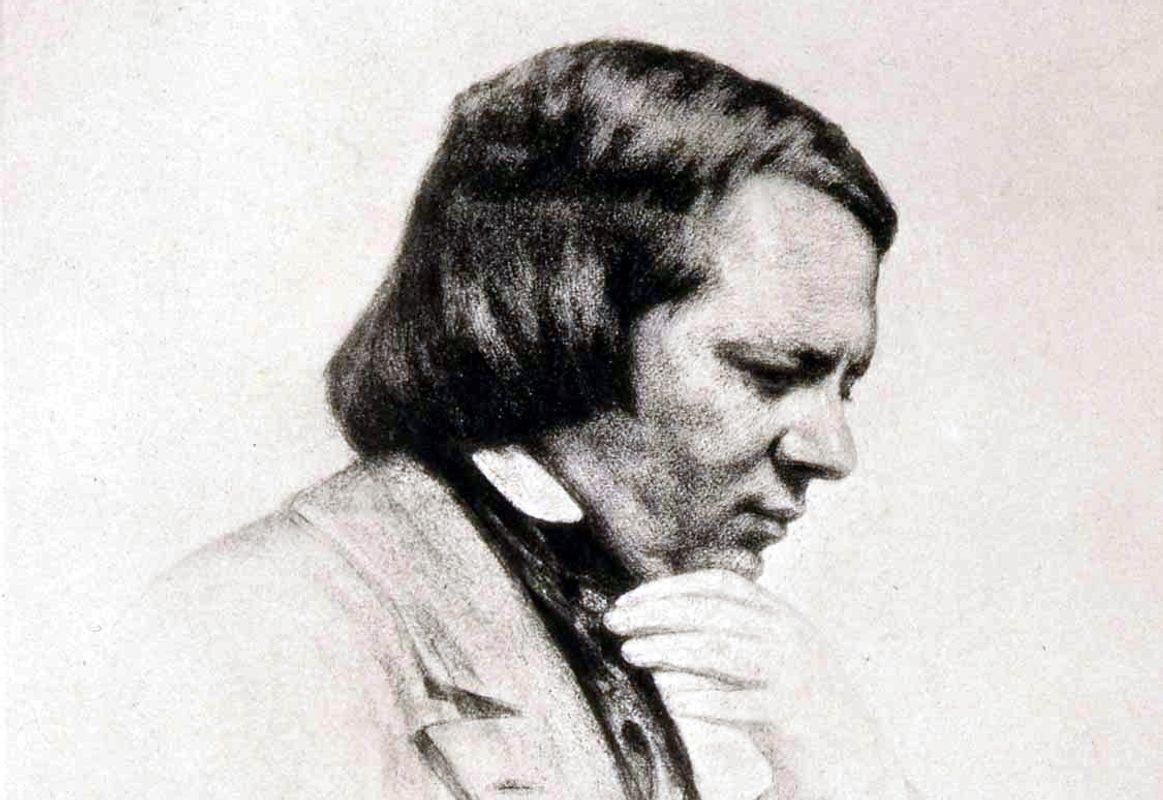
The revised version received its premiere under the composer’s baton in Düsseldorf on March 3, 1853. The premiere and subsequent performances proved to be highly successful, establishing the Schumann Fourth as a Romantic symphony of the highest inspiration. The lack of pauses between movements, which so confused the audience at the 1841 premiere, soon became recognized as one of the work’s strengths. That technique, coupled with the return and metamorphoses of thematic material throughout the Symphony, creates an orchestral journey of remarkable unity and dramatic momentum.
While You Listen
- The Fourth Symphony is in four movements, played without pause. The first begins with a brooding slow-tempo introduction (Ziemlich langsam) featuring themes that return throughout the work. The music accelerates into the movement’s principal quick-tempo portion (Lebhaft).
- In the slow-tempo second movement (Romanze. Ziemlich langsam), the strings reprise music from the introduction, which also serves as the basis for an episode featuring an enchanting violin solo.
- The third movement, a vigorous Scherzo with an intervening lyrical sequence, recalls the first movement’s slow-tempo introduction and second movement violin solo.
- Once again, music from the opening movement’s slow-tempo introduction returns in a mysterious transitional passage to the finale’s energetic, triumphant resolution.
