




 Program Notes
Scheherazade
Nikolai Rimsky-Korsakov (1844–1908)
Premiere: November 3, 1888, in St. Petersburg, Russia
Approximate performance time is 42 minutes
Behind the Music
The fantastic collection of tales known as The Arabian Nights, or A Thousand and One Nights, has captivated readers for centuries. The ancient stories, mostly of Arabic, Indian, or Persian origin, were first presented to European readers in an early 18th-century French translation by Antoine Galland. In the late 19th century, British explorer Sir Richard Burton created a popular English-language version. To this day, such tales as “The History of Aladdin, or the Wonderful Lamp,” “The History of Sinbad the Sailor,” and “The History of Ali Baba and the Forty Thieves,” continue to weave their magical spell.
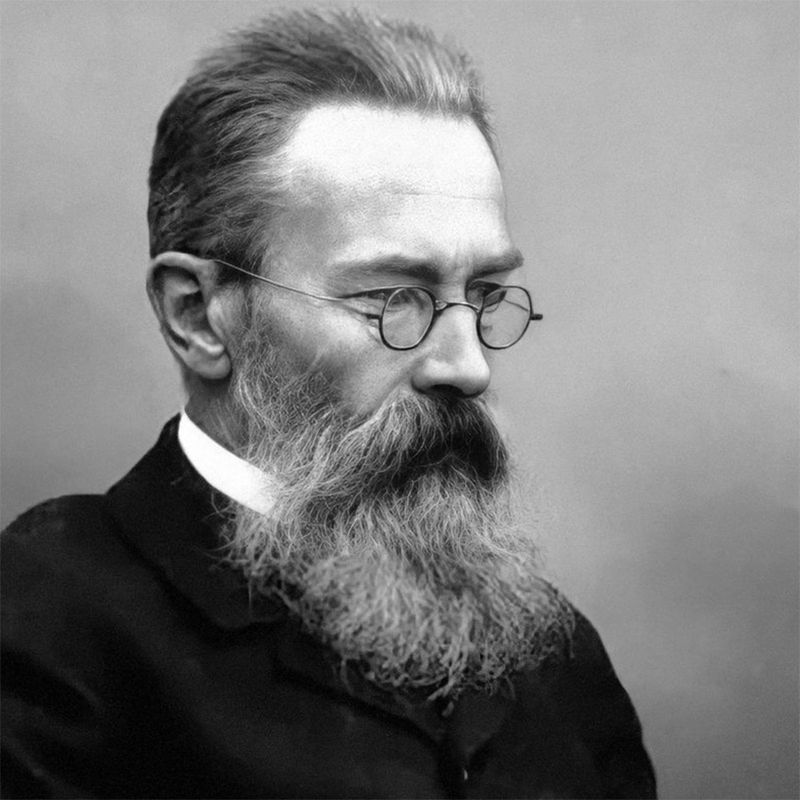
Russian composer Nikolai Rimsky-Korsakov created his Scheherazade, Symphonic Suite after “A Thousand and One Nights,” in the summer of 1888. During that same period, Rimsky-Korsakov completed his brilliant Russian Easter Overture. In speaking of Scheherazade, as well as his Capriccio espagnole and Russian Easter Overture, the composer proudly acknowledged: “My orchestration had achieved a considerable degree of virtuosity and bright sonority.” Rimsky-Korsakov’s deployment of orchestral forces — coupled with his unerring sense of dramatic contrast and impressive melodic gifts — have assured continued affection for Scheherazade by musicians and audiences alike.
While You Listen
Throughout the work’s four movements, the solo violin represents Scheherazade, narrating her fantastic tales.
I. The Sea and Sinbad’s Ship
II. The Story of the Kalendar Prince
III. The Young Prince and the Young Princess
IV. The Festival of Baghdad — The Sea — The Ship Goes to Pieces Against a Rock Surmounted by a Bronze Warrior